English
  Japanese
Breaking away from fax culture: Generative AI allows employees with children to thrive! DX in the food catalog gift industry reduces operational efficiency by 75%
Sunrich Co., Ltd.

Issues before implementation
- Digitalization of business operations is not progressing, and productivity is not increasing
- Many employees are balancing work and childcare, and improving work efficiency is an urgent priority
- It took a lot of time to create documents and perform tasks that were highly dependent on individual staff.
Effects after implementation
- The digitization of a wide range of operations, such as code creation in the systems department and schedule creation in the sales department, is expanding across the company.
- Achieved a reduction of up to 751 TP3T in work hours by creating training materials for new employees, etc., greatly contributing to work style reform for employees, including those raising children
- The instantaneous generation of "drafts" by AI significantly reduces the man-hours required for document creation. It also eliminates the dependency on individuals on internal newsletters and handover documents.
table of contents
Company Introduction
Sunrich Co., Ltd. is a catalog sales company headquartered in Fukuoka Prefecture that develops food gifts nationwide. They plan, edit, and sell catalog gifts such as mid-year gifts, year-end gifts, and New Year's dishes for department stores and consumer cooperatives. Their strength lies in their "direct from the farm system," which delivers seasonal Kyushu ingredients directly from producers. This patented logistics model allows them to directly ship fresh products nationwide without holding inventory.
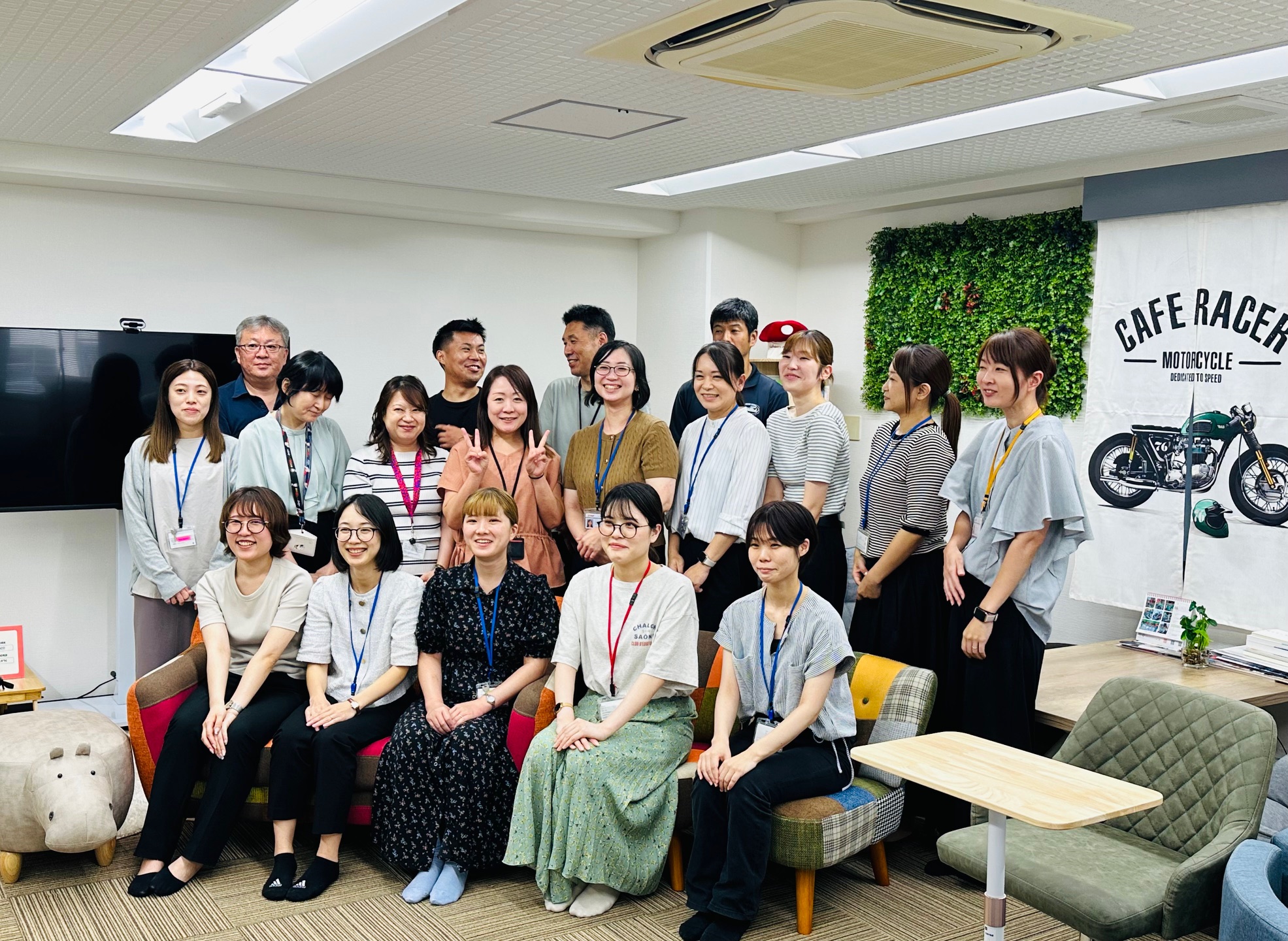
The company has a workforce of 20 to 50 people, with approximately 80% being female. Many of these are mothers raising children, and the company is working to create an environment where they can work efficiently within their limited time. In recent years, the company has launched new businesses such as catalog gifts for corporate employee benefits and "Omakase EC Marche," which allows businesses to quickly set up a food e-commerce site. The company is also actively contributing to social issues by reducing food waste, supporting children's cafeterias, and using food trucks to interview producers.
Issues before introducing generative AI
Before introducing generative AI, Sunrich faced a major challenge in improving work efficiency due to the analog culture inherent in the industry. The ultra-analog environment, where "fax is the main communication tool," led to work being personalized and inefficient, hindering work style reform.
Against this backdrop, the company obtained the "DX Certification System" for companies and decided to introduce generative AI training as it made a full-scale shift towards transformation. The AI training started as a semi-experimental initiative to see whether AI could be used in a very analog workplace, but it ultimately resulted in a positive response to operational improvements in many departments.
Effects after generative AI introduction training
The introduction of AI training has led to rapid adoption of generative AI in each department. The speed and quality of work has improved dramatically in a company where analog work was the norm, and this has contributed greatly to resolving issues that arose before the introduction of AI.
New employee training materials: 120 minutes → 30 minutes (reduction of 75%)
Creating an in-house newsletter: 60 minutes → 20 minutes (reduction of 66%)
Email newsletter manuscript: 90 minutes → 45 minutes (50% reduction)
It also enables immediate resolution of questions about function searches and PC operation, improving productivity. Furthermore, a culture of sharing AI usage methods among employees through daily reports has taken root, improving IT literacy across the company. "AI is like having Doraemon with you," says the company, and the company has experienced a dramatic improvement in work efficiency.
Future outlook
Going forward, Sunrich plans to use generative AI not just for business support, but also to incorporate it into the evolution of its services and business model. Currently, the company has completed a demonstration experiment using AI to automatically detect errors in food labeling, and is working to improve the accuracy of its quality control operations. Additionally, Catalog Marche, a web system that automates catalog production, plans to introduce AI-powered automatic manuscript generation, which is expected to significantly reduce production man-hours.
For external services, the company is promoting improvements to customer experience through AI, such as responding to inquiries via chatbots and automating QA responses on its e-commerce site. Furthermore, the company plans to incorporate AI into its core system, the direct sales system, to speed up and improve its operations.