English
  Japanese
From creating proposal images to automating product labeling: How a company specializing in original merchandise has expanded its use of Gemini across different departments.
iGoods Co., Ltd.


Issues before implementation
- Inconsistent use of tools and techniques: Different teams used different generative AIs and techniques, and there was no established method for using Google Workspace's Gemini as a company-wide platform.
- The workload of writing and research: Time was being spent on preliminary tasks for the proposal, such as reviewing proposals and estimates, conducting market research, and creating documents.
- Individual ingenuity does not remain within the organization: AI utilization remained limited to individual efforts, and there were no criteria or rules for making decisions such as "what should the company do in this case?"
Effects after implementation
- Variation in tools and usage: The workshop covered using Gemini in a work environment, from Gem and NotebookLM to integration with spreadsheets and GAS, across four sessions. The final report organized participants' usage into five areas, making it shareable across departments.
- The workload of writing and research: The sales team is using AI to create proposal images and request documents, and the design team is using AI to proofread instruction manuals and create labeling for outer packaging, working to streamline proposal preparation and labeling creation.
- Individual innovations don't stick within the organization: In the three departments of sales, design, and promotion, successful case studies were created that other members could replicate, and these were shared across departments during follow-up meetings.
table of contents
I-Goods Co., Ltd. conducted a six-month AI generation training program called "Corporate Reskilling" for 10 employees from November 2025 to April 2026. The tool used was Gemini from Google Workspace. The applications of AI were expanded in each department, from creating proposal images and product descriptions to recruitment tasks.
At the start of the training, many participants were already using AI in their work. The challenge wasn't "whether or not to use it," but "how to integrate it into the work processes using Gemini, the company's foundation." This article introduces how the company, which handles everything from planning to manufacturing and sales of original goods, expanded individual ingenuity into departmental work over a six-month period.
Company Introduction
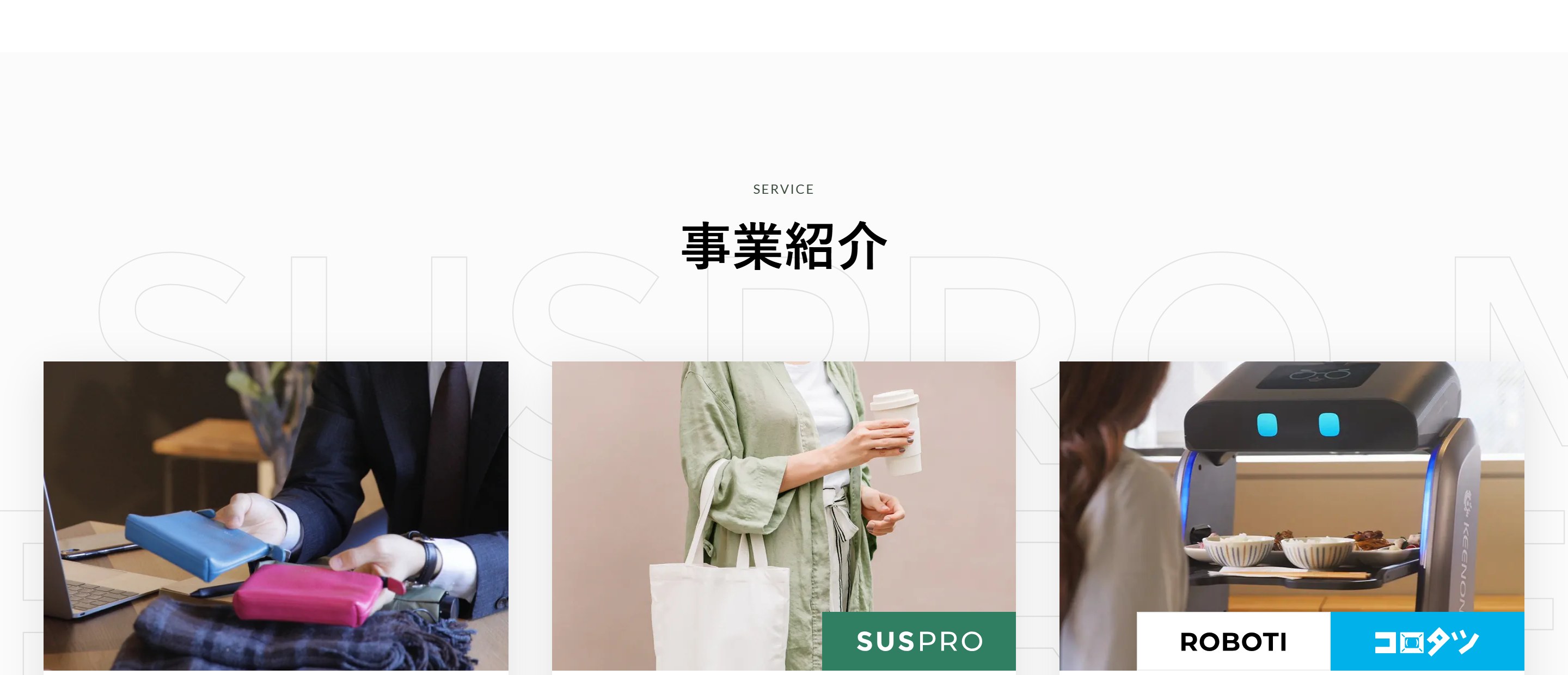
iGoods Co., Ltd. is a company established in January 2016 and headquartered in Shibuya-ku, Tokyo. Its main business is the planning and production of fully custom-made original goods and promotional items for sale. In addition, in order to support companies' efforts in response to the growing demand for SDGs and the increasingly serious social issue of labor shortages, it develops its own brands "SUSPRO" and "ROBOTI" that handle sustainable goods and robots. Under the corporate philosophy of "Turning thoughts into reality with overflowing love," the company is keenly aware of the needs of society and is developing its business quickly. It has 100 employees (including part-time and temporary staff).
Ten people from various departments—sales, planning/marketing, public relations, creative, and human resources/general affairs—participated in this training.
Issues before introducing generative AI
In a survey conducted at the start of the training, 9 out of 10 participants answered that they "occasionally use" AI in their work, and all 10 reported using AI "5 days a week." However, the tools and methods used varied greatly from team to team.
Our team has primarily used chatGPT. We would like to demonstrate the advantages of switching to Gemini as the basis for our AI applications and promote its adoption, so we would appreciate it if you could provide guidance in future lectures.
From participant surveys
The time-consuming part was the preliminary work before the proposal was even submitted. At the start, common complaints included "It takes time to create the proposal," "It takes time to conduct market research and other research," and "There are so many items to propose, so it takes time to check estimates and prepare documents." For a company that plans and designs goods on a fully customized basis, preparing the proposal is the very core of their business.
Another challenge was creating a system that could transform individual ingenuity into organizational strength. In the initial survey, some respondents cited "creating a company-wide rule base for AI, and having a clearly defined framework for decision-making such as 'What should iGoods do in this situation?'" as their desired state.
Implementation details - A unique initiative by iGoods Co., Ltd.
- A four-part workshop on using Gemini in your work.
In the first session, we created a Gem; in the second session, we did practical work using a Gem for creating slides and NotebookLM; in the third session, we covered using Gemini within Google Workspace and integrating it with spreadsheets and GAS; and in the fourth session, we covered integrating NotebookLM and Gemini and creating Gems for improving work efficiency. - Sharing of practical work and output
Each session included hands-on workshops, with time allocated for participants to share the images and prompts they generated with each other. Seeing other people's results broadened the range of ways they could use the same function. - Connecting to practical application through after-sales support and utilization assistance.
After the four sessions, we reviewed the effectiveness of the program in a follow-up meeting, and in the utilization support meeting, we used new features such as Flow and Google Workspace Studio as topics to help ensure their integration into daily work. - The application themes are organized into five areas.
In the final report, we organized the participants' application methods into five areas: document and material creation, image generation and design proposals, information organization and knowledge accumulation, research and analysis, and automation and business process design. This was done to make individual efforts shareable across departments.
Benefits of using generative AI
What stood out over the past six months was that each department became more concrete about "how to incorporate AI into their work." The sales team is using AI to create proposal images and request documents, speeding up the proposal process. The design team has expanded the use of AI, which was previously used for proofreading instruction manuals, to creating the labeling for product packaging, automating the process.
Usage frequency remained high throughout the training. In the surveys conducted after all four workshops, the average frequency of AI use among responding participants was 4.8 to 5.0 days per week in each session (the number of respondents varied depending on the session).
The uses of AI have expanded across different departments.
| Departments/Teams | Main AI-based operations |
|---|---|
| Sales team | Creating proposal images / Creating requested documents such as designs, samples, and instruction manuals / Requesting quotes from factories / Translation of communications with overseas parties |
| Design Team | Proofreading of instruction manual text / Creation of labeling for product packaging (carton) / Generation of images for design purposes |
| Public Relations and Promotion | Creating images for productions and websites / Writing text for flyers and websites / Brainstorming project ideas / Summarizing project and brand outlines |
| Sustainable Goods Business | Market, competitor, and trend research / Creation of project proposals and presentation materials / Compilation and reporting of campaign results / Preparation for business negotiations |
| Robotics business | Chatbot implementation for robot-related questions on the official website / Customer support email templates / Creation of Q&A for new product launches / Translation of robot documentation |
| Human Resources and General Affairs | Creating recruitment outreach messages and job postings / Designing in-house training curricula / Labor analysis and research |
| Trade sales support | Estimated shipping costs / Verification of inspection and customs documents / Verification of invoice details |
From planning and proposing merchandise to handling inquiries about robots, estimating shipping costs, and checking customs documents, the company's wide range of businesses means that different departments are finding different uses for the robots.
The participant surveys also show that many are immediately sharing what they have learned with those around them.
I frequently take and edit photos, so I learned a great deal about image generation. I also immediately shared the video generation method with my team members after the training, and we created a preliminary video for an event. The results were quite good, and I feel confident that we can implement it in the future.
From participant surveys
Being able to get hands-on experience during training proved valuable in a busy work environment.
In my daily work, I tend to prioritize the tasks at hand and put off learning how to use AI in the first place, so it's very helpful that I can learn about it during training (not as homework).
From participant surveys
Towards the end of the training, participants began to think not only about improving the efficiency of individual tasks, but also about considering the system itself.
We consulted with Gemini regarding improving operational efficiency because we understood that we could systematize things from various perspectives.
From participant surveys
During the follow-up meeting where we shared examples from other departments, we received feedback that the examples of sharing on Slack and the perspective of entrusting Gem creation to junior colleagues were particularly helpful.
Future outlook
The next point of discussion is how to integrate the innovations developed in each department into the organizational structure. In our final report, we proposed the following initiatives.
- Use previous examples as a model.
We create templates from case studies generated in sales, design, and promotion, and organize them in a way that other team members can use. - Organize how to use it by department.
List frequently used tasks and recommended prompts for each department to serve as a guide for new users. - Continue to share
Starting with those responsible for promoting the initiative, we will continuously hold small, ongoing events to share best practices.
Through a six-month initiative, I-Goods Co., Ltd. has moved from using generation AI "individually" to "integrating it into departmental work." One of the achievements gained in this process is the creation of reproducible case studies in each department.
"With overflowing love, we give shape to your feelings"—the company's journey of transforming each customer's feelings into tangible goods is entering its next stage with the addition of a new tool: generative AI.