English
  Japanese
The full picture of "AI x Know-how Assetization" being tackled by a social insurance labor consultant corporation
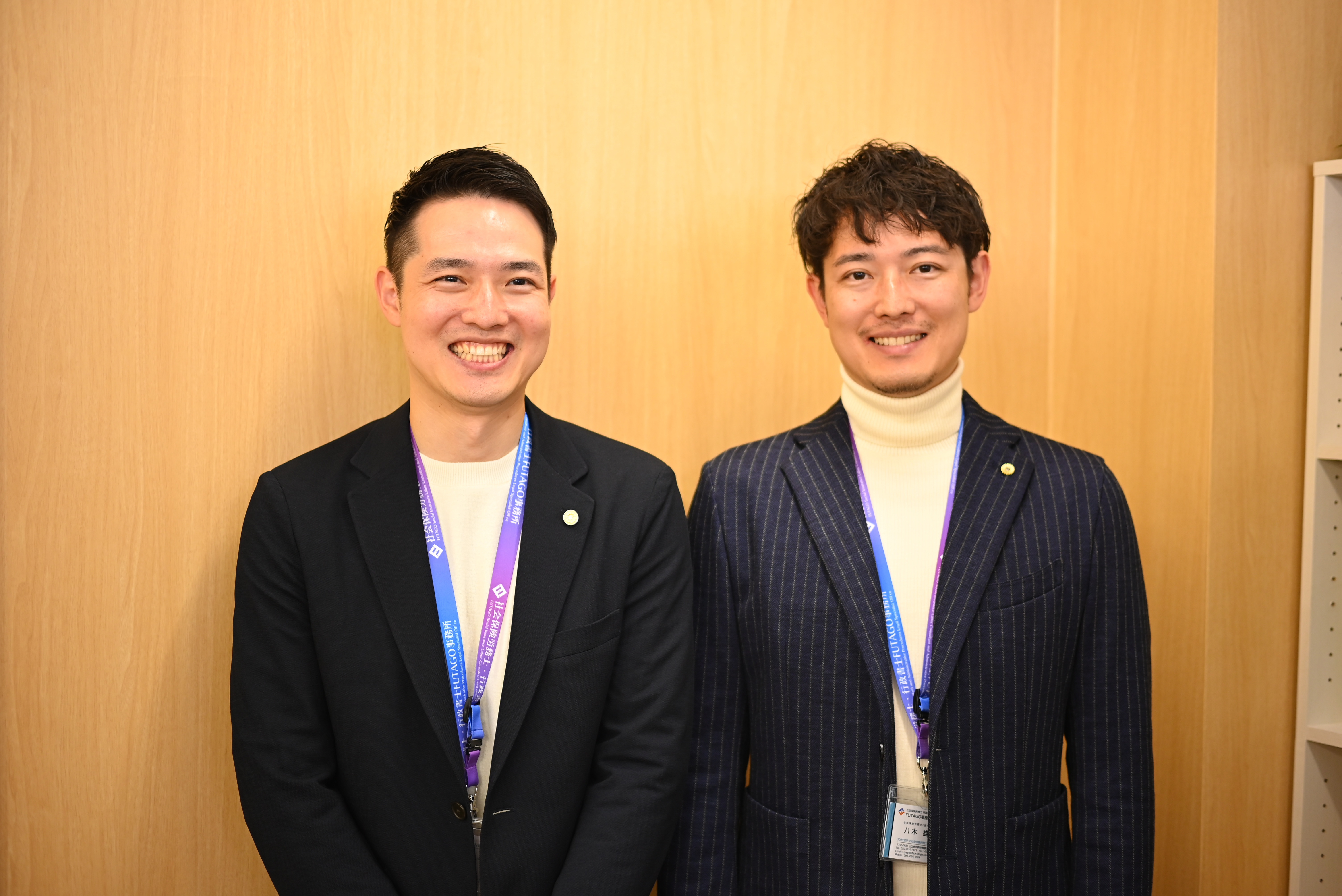
BIZARQ Social Insurance Labor Consultant Corporation

Issues before implementation
- Disparities in AI and IT literacy among members
- The burden of daily research, such as researching legal changes and checking system operation
- The burden of monthly routine tasks such as payroll calculations and administrative procedures
- Business know-how is dependent on individuals due to differences in the number of years of experience among members
Effects after implementation
- Through bottom-up, company-wide generative AI training, AI will become an infrastructure for everyday operations.
- Utilizing NotebookLM to build an in-house QA system and dramatically reduce information search and research costs
- In addition to streamlining routine tasks with AI and RPA, the company also brings in-house production of flyers and other tasks using image generation AI.
- Notion AI turns daily work history into assets, building a system that can output highly accurate data regardless of years of experience
table of contents
Company Introduction
BIZARQ Social Security and Labor Consultant Corporation is a social security and labor office with two locations, one in Ube City, Yamaguchi Prefecture, and the other in Shinjuku Ward, Tokyo. Now in its fourth year since establishment, the office practices flexible working styles that go beyond the boundaries of professional practice, with nearly half of its approximately 13 members working fully remotely and with full flextime.
The social insurance and labor consultant industry is an extremely elderly industry, with the average age of certified personnel being 55, and in Yamaguchi Prefecture in particular, it is said to be over 60 years old. However, we are run by a young team, mostly in their 30s. Rather than the image of "professionals = stuffy," we operate in a venture-like atmosphere, and value above all else making it easy for our customers to consult with us.
Issues before introducing generative AI
I myself have always had a desire to proactively adopt new technology, so I gathered information on an individual level and actually tried out AI tools. However, when I looked across the organization, while some members were interested in AI, others kept their distance due to a lack of confidence, and the big difference in the level of utilization was an issue.
Another major concern was the personalization of know-how due to differences in years of experience among members. Due to the nature of the work of social insurance labor consultants, the basis for judgments and answers tends to be tied to individual experience. The burden of "researching" to constantly keep up with the latest information is also significant, and until now, we had no choice but to rely on analog methods such as Google searches. There are many routine tasks that require a lot of man-hours, such as payroll calculations and standard procedures that occur every month, and we recognized that streamlining these tasks would affect the productivity of the entire organization.
Effects after generative AI introduction training
Introducing Digirise's training and ensuring that all employees have time to work with AI has significantly changed our organizational culture. I feel that we have achieved a bottom-up approach where everyone, not just a specific person, is now adept at using ChatGPT and Gemini as "standard tools."
In terms of specific applications, NotebookLM was first trained to learn system manuals and company regulations, and is now being used as an internal Q&A bot. This has significantly reduced the time it takes to search for specialized information. Even more groundbreaking is the system that stores daily work history in Notion and allows it to be accessed using Notion AI.
By turning the know-how that tends to be personal, such as "how I responded to customers in the past," into an asset, even inexperienced staff members can quickly create answer proposals with an accuracy close to my own thinking. Furthermore, we are also using the latest image generation models to in-house produce diagrams for in-house study sessions and seminar flyers. We are seeing the benefits of AI spreading to creative fields as well.
Future outlook
The future I envision is one in which AI and humans clearly divide roles.
Routine tasks such as paperwork, payroll calculations, and general consultations will be automated using AI and RPA. With the time saved, we humans (labor and social insurance consultants) would like to focus on providing higher-value-added consulting, such as making proposals to improve the future of our clients' companies and providing countermeasures for labor risks that have yet to materialize.
By refining our in-house AI that continuously learns from work history, we will turn all of our in-house knowledge into an asset. BIZARQ Labor and Social Security Attorneys Corporation will continue to embody the ideal form of a next-generation professional office by utilizing technology to its advantage.